
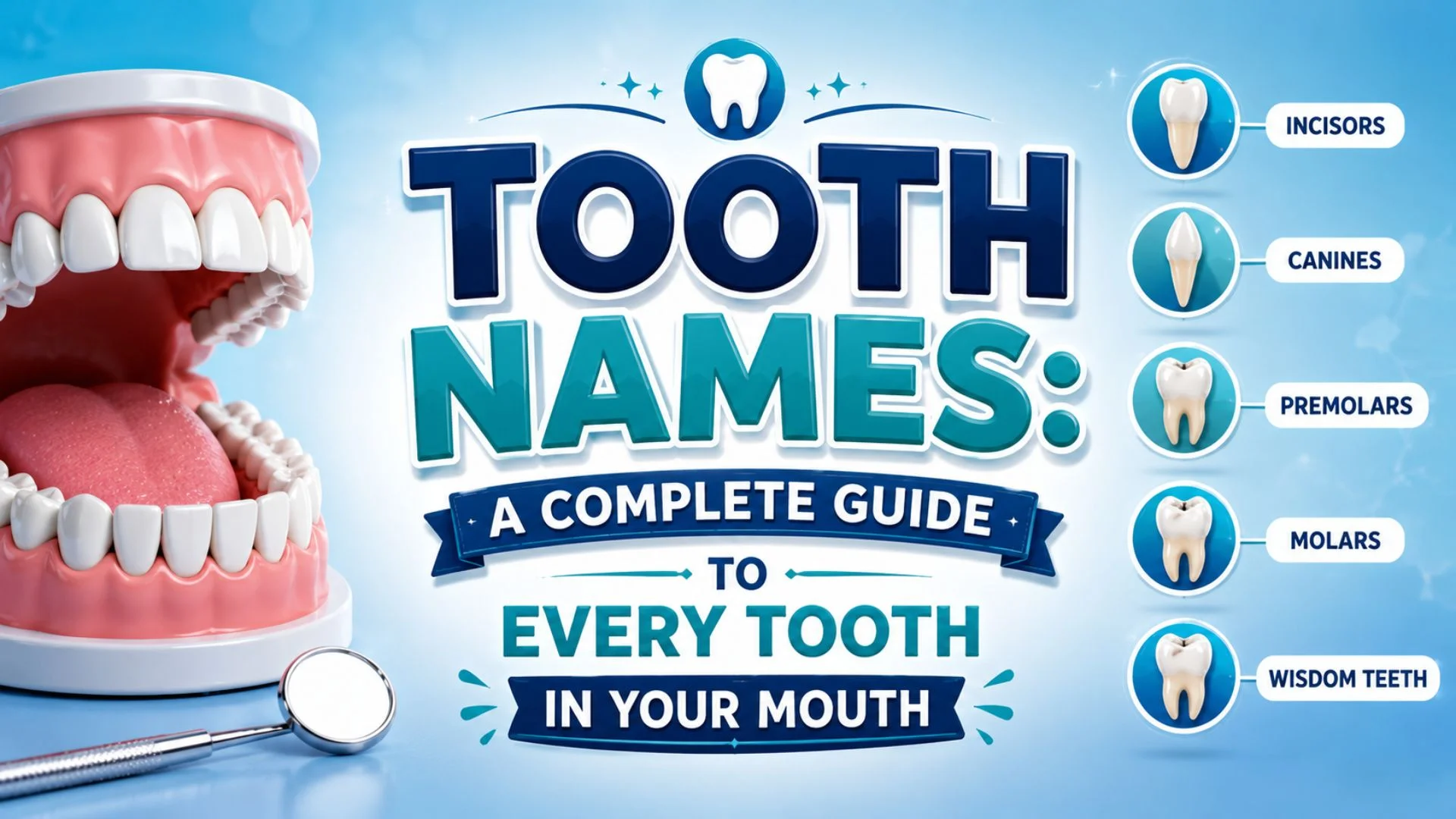
Understanding tooth names is essential for anyone who wants to take better care of their oral health. When you visit the dentist and hear terms like incisors, canines, or molars, knowing exactly which teeth they are referring to helps you follow advice and maintain good hygiene.
Your mouth contains different types of teeth, and each one has a specific job. From biting into an apple to chewing a steak, every tooth plays a unique role. Learning these names also makes dental visits less confusing and more productive.
How to Identify and Remember Your Teeth
The best way to learn tooth names is to break them down into four simple categories. Dentists divide teeth by their shape and function. The front teeth are sharp and thin for cutting food. The pointed teeth next to them are for tearing. The wider teeth in the back are for crushing and grinding. Each type has a name that describes its job.
You can also remember them by their position in your mouth. Upper teeth and lower teeth have the same names. Left side and right side are mirror images of each other. This symmetry makes learning easier than you might think.
Incisors Names
Incisors are the front teeth that you see when someone smiles. These teeth have flat, sharp edges designed for cutting and biting into food. You have eight incisors in total, four on top and four on bottom.
- Central Incisor
- Lateral Incisor
- Upper Right Central
- Upper Left Central
- Lower Right Central
- Lower Left Central
- Upper Right Lateral
- Upper Left Lateral
- Lower Right Lateral
- Lower Left Lateral
- Maxillary Central
- Mandibular Central
- Maxillary Lateral
- Mandibular Lateral
- Right Central
- Left Central
- Right Lateral
- Left Lateral
- Top Front Central
- Bottom Front Central
- Top Side Lateral
- Bottom Side Lateral
- Upper Front Tooth
- Lower Front Tooth
- First Front Tooth
- Second Front Tooth
- Front Center Tooth
- Front Side Tooth
- Upper Middle Tooth
- Lower Middle Tooth
Canines Names
Canines are the pointed teeth located next to the incisors. These teeth are designed for tearing and ripping food. You have four canines in total, one on each side of the upper and lower jaws.
- Upper Canine
- Lower Canine
- Maxillary Canine
- Mandibular Canine
- Right Canine
- Left Canine
- Upper Right Canine
- Upper Left Canine
- Lower Right Canine
- Lower Left Canine
- Top Canine Tooth
- Bottom Canine Tooth
- Eye Tooth
- Cuspid
- Upper Cuspid
- Lower Cuspid
- Right Cuspid
- Left Cuspid
- Maxillary Right Cuspid
- Mandibular Left Cuspid
- Upper Pointed Tooth
- Lower Pointed Tooth
- Corner Canine
- Side Canine
- Front Canine
- Back Canine
- Primary Canine
- Permanent Canine
- Top Corner Tooth
- Bottom Corner Tooth
Premolars Names
Premolars are the transitional teeth located between canines and molars. These teeth have flat surfaces with ridges for crushing and tearing food. Adults have eight premolars, two on each side of the upper and lower jaws.
- First Premolar
- Second Premolar
- Upper First Premolar
- Upper Second Premolar
- Lower First Premolar
- Lower Second Premolar
- Maxillary First Premolar
- Maxillary Second Premolar
- Mandibular First Premolar
- Mandibular Second Premolar
- Right First Premolar
- Right Second Premolar
- Left First Premolar
- Left Second Premolar
- Upper Right First Premolar
- Upper Right Second Premolar
- Upper Left First Premolar
- Upper Left Second Premolar
- Lower Right First Premolar
- Lower Right Second Premolar
- Lower Left First Premolar
- Lower Left Second Premolar
- Bicuspid First
- Bicuspid Second
- Upper Bicuspid
- Lower Bicuspid
- Maxillary Bicuspid
- Mandibular Bicuspid
- First Transitional Tooth
- Second Transitional Tooth
Molars Names
Molars are the large flat teeth at the back of your mouth. These teeth are designed for grinding and chewing food into small pieces. Adults have twelve molars including wisdom teeth, three on each side of the upper and lower jaws.
- First Molar
- Second Molar
- Third Molar
- Upper First Molar
- Upper Second Molar
- Upper Third Molar
- Lower First Molar
- Lower Second Molar
- Lower Third Molar
- Maxillary First Molar
- Maxillary Second Molar
- Maxillary Third Molar
- Mandibular First Molar
- Mandibular Second Molar
- Mandibular Third Molar
- Right First Molar
- Right Second Molar
- Right Third Molar
- Left First Molar
- Left Second Molar
- Left Third Molar
- Upper Right First Molar
- Upper Right Second Molar
- Upper Right Third Molar
- Upper Left First Molar
- Upper Left Second Molar
- Upper Left Third Molar
- Lower Right First Molar
- Lower Right Second Molar
- Lower Right Third Molar
- Lower Left First Molar
- Lower Left Second Molar
- Lower Left Third Molar
- Six Year Molar
- Twelve Year Molar
- Wisdom Tooth
- Back Grinding Tooth
- Maxillary Grinder
- Mandibular Grinder
Wisdom Teeth Names
Wisdom teeth are the third molars that typically appear between ages seventeen and twenty five. These teeth are the last to erupt and often cause crowding or impaction problems. Many people have their wisdom teeth removed to prevent dental issues.
- Upper Wisdom Tooth
- Lower Wisdom Tooth
- Maxillary Wisdom
- Mandibular Wisdom
- Right Wisdom Tooth
- Left Wisdom Tooth
- Upper Right Wisdom
- Upper Left Wisdom
- Lower Right Wisdom
- Lower Left Wisdom
- Third Maxillary Molar
- Third Mandibular Molar
- Impacted Wisdom Tooth
- Erupted Wisdom Tooth
- Partial Wisdom Tooth
- Fully Erupted Wisdom
- Retained Wisdom
- Asymptomatic Wisdom
- Symptomatic Wisdom
- Complete Wisdom
- Incomplete Wisdom
- Horizontal Wisdom
- Vertical Wisdom
- Angled Wisdom
- Soft Tissue Impaction
- Bony Impaction
- Partial Bony Impaction
- Complete Bony Impaction
- Wisdom Molar
- Late Molar
Primary Teeth Names
Primary teeth are also called baby teeth or milk teeth. Children have twenty primary teeth that eventually fall out to make room for permanent teeth. These teeth are smaller and whiter than adult teeth.
- Central Incisor Primary
- Lateral Incisor Primary
- Canine Primary
- First Molar Primary
- Second Molar Primary
- Upper Central Primary
- Upper Lateral Primary
- Upper Canine Primary
- Upper First Molar Primary
- Upper Second Molar Primary
- Lower Central Primary
- Lower Lateral Primary
- Lower Canine Primary
- Lower First Molar Primary
- Lower Second Molar Primary
- Maxillary Central Primary
- Maxillary Lateral Primary
- Maxillary Canine Primary
- Maxillary First Molar Primary
- Maxillary Second Molar Primary
- Mandibular Central Primary
- Mandibular Lateral Primary
- Mandibular Canine Primary
- Mandibular First Molar Primary
- Mandibular Second Molar Primary
- Right Central Primary
- Left Central Primary
- Right Canine Primary
- Left Canine Primary
- Baby Central
- Baby Lateral
- Baby Canine
- Baby First Molar
- Baby Second Molar
- Milk Tooth
- Deciduous Central
- Deciduous Lateral
- Deciduous Canine
- Deciduous First Molar
- Deciduous Second Molar
Permanent Teeth Names
Permanent teeth are the adult teeth that replace primary teeth. Most people have thirty two permanent teeth including wisdom teeth. These teeth are designed to last a lifetime with proper care.
- Central Permanent
- Lateral Permanent
- Canine Permanent
- First Premolar Permanent
- Second Premolar Permanent
- First Molar Permanent
- Second Molar Permanent
- Third Molar Permanent
- Upper Central Permanent
- Upper Lateral Permanent
- Upper Canine Permanent
- Upper First Premolar Permanent
- Upper Second Premolar Permanent
- Upper First Molar Permanent
- Upper Second Molar Permanent
- Upper Third Molar Permanent
- Lower Central Permanent
- Lower Lateral Permanent
- Lower Canine Permanent
- Lower First Premolar Permanent
- Lower Second Premolar Permanent
- Lower First Molar Permanent
- Lower Second Molar Permanent
- Lower Third Molar Permanent
- Maxillary Central Permanent
- Maxillary Lateral Permanent
- Maxillary Canine Permanent
- Maxillary First Premolar Permanent
- Maxillary Second Premolar Permanent
- Maxillary First Molar Permanent
- Maxillary Second Molar Permanent
- Maxillary Third Molar Permanent
- Mandibular Central Permanent
- Mandibular Lateral Permanent
- Mandibular Canine Permanent
- Mandibular First Premolar Permanent
- Mandibular Second Premolar Permanent
- Mandibular First Molar Permanent
- Mandibular Second Molar Permanent
- Mandibular Third Molar Permanent
- Adult Central
- Adult Lateral
- Adult Canine
- Adult Premolar
- Adult Molar
Maxillary Teeth Names
Maxillary teeth are the teeth located in your upper jaw. These teeth work together with the mandibular teeth to bite, tear, and grind food. The upper arch is slightly wider than the lower arch.
- Maxillary Central
- Maxillary Lateral
- Maxillary Canine
- Maxillary First Premolar
- Maxillary Second Premolar
- Maxillary First Molar
- Maxillary Second Molar
- Maxillary Third Molar
- Upper Right Maxillary Central
- Upper Left Maxillary Central
- Upper Right Maxillary Lateral
- Upper Left Maxillary Lateral
- Upper Right Maxillary Canine
- Upper Left Maxillary Canine
- Upper Right Maxillary First Premolar
- Upper Left Maxillary First Premolar
- Upper Right Maxillary Second Premolar
- Upper Left Maxillary Second Premolar
- Upper Right Maxillary First Molar
- Upper Left Maxillary First Molar
- Upper Right Maxillary Second Molar
- Upper Left Maxillary Second Molar
- Upper Right Maxillary Third Molar
- Upper Left Maxillary Third Molar
- Top Jaw Central
- Top Jaw Lateral
- Top Jaw Canine
- Top Jaw Premolar
- Top Jaw Molar
- Top Jaw Wisdom
- Maxillary Arch Tooth
- Upper Arch Tooth
- Maxillary Incisor
- Maxillary Cuspid
- Maxillary Bicuspid
- Maxillary Molar
Mandibular Teeth Names
Mandibular teeth are the teeth located in your lower jaw. These teeth are generally stronger than upper teeth because they handle more chewing force. The lower jaw moves during chewing and speaking.
- Mandibular Central
- Mandibular Lateral
- Mandibular Canine
- Mandibular First Premolar
- Mandibular Second Premolar
- Mandibular First Molar
- Mandibular Second Molar
- Mandibular Third Molar
- Lower Right Mandibular Central
- Lower Left Mandibular Central
- Lower Right Mandibular Lateral
- Lower Left Mandibular Lateral
- Lower Right Mandibular Canine
- Lower Left Mandibular Canine
- Lower Right Mandibular First Premolar
- Lower Left Mandibular First Premolar
- Lower Right Mandibular Second Premolar
- Lower Left Mandibular Second Premolar
- Lower Right Mandibular First Molar
- Lower Left Mandibular First Molar
- Lower Right Mandibular Second Molar
- Lower Left Mandibular Second Molar
- Lower Right Mandibular Third Molar
- Lower Left Mandibular Third Molar
- Bottom Jaw Central
- Bottom Jaw Lateral
- Bottom Jaw Canine
- Bottom Jaw Premolar
- Bottom Jaw Molar
- Bottom Jaw Wisdom
- Mandibular Arch Tooth
- Lower Arch Tooth
- Mandibular Incisor
- Mandibular Cuspid
- Mandibular Bicuspid
- Mandibular Grinder
- Lower Jaw Tooth
Right Side Teeth Names
The right side of your mouth contains the same types of teeth as the left side. Dentists use side labels to identify specific teeth during examinations and procedures. Right side teeth are mirror images of left side teeth.
- Right Central
- Right Lateral
- Right Canine
- Right First Premolar
- Right Second Premolar
- Right First Molar
- Right Second Molar
- Right Third Molar
- Upper Right Central
- Upper Right Lateral
- Upper Right Canine
- Upper Right First Premolar
- Upper Right Second Premolar
- Upper Right First Molar
- Upper Right Second Molar
- Upper Right Third Molar
- Lower Right Central
- Lower Right Lateral
- Lower Right Canine
- Lower Right First Premolar
- Lower Right Second Premolar
- Lower Right First Molar
- Lower Right Second Molar
- Lower Right Third Molar
- Right Maxillary Central
- Right Maxillary Lateral
- Right Maxillary Canine
- Right Maxillary Premolar
- Right Maxillary Molar
- Right Mandibular Central
- Right Mandibular Lateral
- Right Mandibular Canine
- Right Mandibular Premolar
- Right Mandibular Molar
- Right Side Incisor
- Right Side Canine
- Right Side Premolar
- Right Side Molar
- Right Side Wisdom
Left Side Teeth Names
The left side of your mouth has teeth that match the right side exactly. Proper naming helps dentists communicate clearly about specific teeth. Left side teeth are numbered separately in dental charts.
- Left Central
- Left Lateral
- Left Canine
- Left First Premolar
- Left Second Premolar
- Left First Molar
- Left Second Molar
- Left Third Molar
- Upper Left Central
- Upper Left Lateral
- Upper Left Canine
- Upper Left First Premolar
- Upper Left Second Premolar
- Upper Left First Molar
- Upper Left Second Molar
- Upper Left Third Molar
- Lower Left Central
- Lower Left Lateral
- Lower Left Canine
- Lower Left First Premolar
- Lower Left Second Premolar
- Lower Left First Molar
- Lower Left Second Molar
- Lower Left Third Molar
- Left Maxillary Central
- Left Maxillary Lateral
- Left Maxillary Canine
- Left Maxillary Premolar
- Left Maxillary Molar
- Left Mandibular Central
- Left Mandibular Lateral
- Left Mandibular Canine
- Left Mandibular Premolar
- Left Mandibular Molar
- Left Side Incisor
- Left Side Canine
- Left Side Premolar
- Left Side Molar
- Left Side Wisdom
Anterior Teeth Names
Anterior teeth are the teeth at the front of your mouth. These include incisors and canines. Anterior teeth are visible when you smile and talk, making them important for appearance and speech.
- Anterior Incisor
- Anterior Canine
- Maxillary Anterior
- Mandibular Anterior
- Upper Anterior
- Lower Anterior
- Right Anterior
- Left Anterior
- Anterior Central
- Anterior Lateral
- Anterior Cuspid
- Front Anterior Tooth
- Upper Front Anterior
- Lower Front Anterior
- Anterior Maxillary Central
- Anterior Maxillary Lateral
- Anterior Maxillary Canine
- Anterior Mandibular Central
- Anterior Mandibular Lateral
- Anterior Mandibular Canine
- Right Anterior Central
- Left Anterior Central
- Right Anterior Lateral
- Left Anterior Lateral
- Right Anterior Canine
- Left Anterior Canine
- Smile Zone Tooth
- Front Visible Tooth
- Aesthetic Zone Tooth
- Social Six Tooth
- Anterior Esthetic Tooth
- Front Row Tooth
- Anterior Arch Tooth
- Anterior Segment Tooth
- Forward Tooth
- Front Mouth Tooth
Posterior Teeth Names
Posterior teeth are the teeth at the back of your mouth. These include premolars and molars. Posterior teeth handle most of the heavy chewing and grinding work during meals.
- Posterior Premolar
- Posterior Molar
- Maxillary Posterior
- Mandibular Posterior
- Upper Posterior
- Lower Posterior
- Right Posterior
- Left Posterior
- Posterior First Premolar
- Posterior Second Premolar
- Posterior First Molar
- Posterior Second Molar
- Posterior Third Molar
- Upper Right Posterior
- Upper Left Posterior
- Lower Right Posterior
- Lower Left Posterior
- Back Chewing Tooth
- Posterior Bicuspid
- Posterior Grinder
- Posterior Maxillary Tooth
- Posterior Mandibular Tooth
- Right Posterior Segment
- Left Posterior Segment
- Upper Posterior Arch
- Lower Posterior Arch
- Posterior Occlusal Tooth
- Back Mouth Tooth
- Chewing Zone Tooth
- Posterior Quadrant Tooth
- Distal Tooth
- Rear Tooth
- Posterior Crown Tooth
- Back Jaw Tooth
- Posterior Surface Tooth
- Grinding Tooth
Universal Numbering System Names
The Universal Numbering System assigns a number to each permanent tooth. This system is commonly used by dentists in the United States. Numbers one through thirty two identify every adult tooth.
- Tooth Number One
- Tooth Number Two
- Tooth Number Three
- Tooth Number Four
- Tooth Number Five
- Tooth Number Six
- Tooth Number Seven
- Tooth Number Eight
- Tooth Number Nine
- Tooth Number Ten
- Tooth Number Eleven
- Tooth Number Twelve
- Tooth Number Thirteen
- Tooth Number Fourteen
- Tooth Number Fifteen
- Tooth Number Sixteen
- Tooth Number Seventeen
- Tooth Number Eighteen
- Tooth Number Nineteen
- Tooth Number Twenty
- Tooth Number Twenty One
- Tooth Number Twenty Two
- Tooth Number Twenty Three
- Tooth Number Twenty Four
- Tooth Number Twenty Five
- Tooth Number Twenty Six
- Tooth Number Twenty Seven
- Tooth Number Twenty Eight
- Tooth Number Twenty Nine
- Tooth Number Thirty
- Tooth Number Thirty One
- Tooth Number Thirty Two
- Number One Wisdom
- Number Sixteen Wisdom
- Number Seventeen Wisdom
- Number Thirty Two Wisdom
- Number Eight Incisor
- Number Nine Incisor
- Number Twenty Four Incisor
- Number Twenty Five Incisor
- Number Eleven Canine
- Number Twenty Two Canine
- Number Six Molar
- Number Eleven Molar
FDI Notation System Names
The FDI Notation System uses two digits to identify each tooth. The first digit indicates the quadrant, and the second digit indicates the tooth position. This system is used internationally.
- Tooth Eleven
- Tooth Twelve
- Tooth Thirteen
- Tooth Fourteen
- Tooth Fifteen
- Tooth Sixteen
- Tooth Seventeen
- Tooth Eighteen
- Tooth Twenty One
- Tooth Twenty Two
- Tooth Twenty Three
- Tooth Twenty Four
- Tooth Twenty Five
- Tooth Twenty Six
- Tooth Twenty Seven
- Tooth Twenty Eight
- Tooth Thirty One
- Tooth Thirty Two
- Tooth Thirty Three
- Tooth Thirty Four
- Tooth Thirty Five
- Tooth Thirty Six
- Tooth Thirty Seven
- Tooth Thirty Eight
- Tooth Forty One
- Tooth Forty Two
- Tooth Forty Three
- Tooth Forty Four
- Tooth Forty Five
- Tooth Forty Six
- Tooth Forty Seven
- Tooth Forty Eight
- FDI Eleven
- FDI Twelve
- FDI Thirteen
- FDI Fourteen
- FDI Fifteen
- FDI Sixteen
- FDI Seventeen
- FDI Eighteen
- FDI Twenty One
- FDI Twenty Two
- FDI Twenty Three
- FDI Twenty Four
- FDI Twenty Five
- FDI Twenty Six
- FDI Twenty Seven
- FDI Twenty Eight
- Quadrant One Tooth
- Quadrant Two Tooth
- Quadrant Three Tooth
- Quadrant Four Tooth
Palmer Notation System Names
The Palmer Notation System uses symbols and letters to identify teeth. Each quadrant has its own symbol pointing toward the center of the mouth. This system is simple and visual.
- Upper Right One
- Upper Right Two
- Upper Right Three
- Upper Right Four
- Upper Right Five
- Upper Right Six
- Upper Right Seven
- Upper Right Eight
- Upper Left One
- Upper Left Two
- Upper Left Three
- Upper Left Four
- Upper Left Five
- Upper Left Six
- Upper Left Seven
- Upper Left Eight
- Lower Right One
- Lower Right Two
- Lower Right Three
- Lower Right Four
- Lower Right Five
- Lower Right Six
- Lower Right Seven
- Lower Right Eight
- Lower Left One
- Lower Left Two
- Lower Left Three
- Lower Left Four
- Lower Left Five
- Lower Left Six
- Lower Left Seven
- Lower Left Eight
- Palmer Upper Right Central
- Palmer Upper Right Lateral
- Palmer Upper Right Canine
- Palmer Upper Right Premolar
- Palmer Upper Right Molar
- Palmer Upper Left Central
- Palmer Upper Left Lateral
- Palmer Upper Left Canine
- Palmer Upper Left Premolar
- Palmer Upper Left Molar
- Palmer Lower Right Central
- Palmer Lower Right Lateral
- Palmer Lower Right Canine
- Palmer Lower Right Premolar
- Palmer Lower Right Molar
- Palmer Lower Left Central
- Palmer Lower Left Lateral
- Palmer Lower Left Canine
- Palmer Lower Left Premolar
- Palmer Lower Left Molar
- Palmer Symbol Tooth
- Quadrant Symbol Tooth
- Angle Symbol Tooth
Common Questions About Tooth Names
How many teeth do adults have?
Most adults have thirty two permanent teeth including wisdom teeth. Some adults have their wisdom teeth removed, leaving twenty eight teeth.
What is the sharpest tooth in your mouth?
The canine teeth are the sharpest and most pointed teeth. They are designed for tearing food and are sometimes called eye teeth.
Which tooth is most often missing at birth?
The lateral incisors are the most common teeth to be congenitally missing. Wisdom teeth are also frequently missing in some people.
Why are they called wisdom teeth?
Wisdom teeth get their name because they appear between ages seventeen and twenty five. This age range was traditionally called the age of wisdom.
What is the difference between premolars and molars?
Premolars have two cusps and are located between canines and molars. Molars have four or five cusps and are larger for heavy grinding.
Do baby teeth have the same names as adult teeth?
Yes, baby teeth use the same names like incisors, canines, and molars. The only difference is that baby teeth have no premolars.
What tooth number is the upper right wisdom tooth?
Tooth number one is the upper right wisdom tooth in the Universal System. Tooth number sixteen is the upper left wisdom tooth.
Can you live without your molars?
You can live without molars but eating becomes very difficult. Molars are essential for grinding food into digestible pieces.
Which tooth has the longest root?
The canine teeth typically have the longest and strongest roots. This makes them the most stable teeth in your mouth.
What are the six year molars?
Six year molars are the first permanent molars that erupt around age six. These teeth do not replace any baby teeth.
Conclusion
Learning tooth names helps you communicate better with your dentist and understand your own oral health. From the sharp incisors at the front to the powerful molars in the back, every tooth has a specific name and job. Whether you need to know about wisdom teeth, baby teeth, or permanent teeth, this guide covers all the essential terms. You can also explore dental anatomy guides and oral health resources for more information about keeping your teeth healthy for life.

Isabella Hayes is a professional content writer and naming expert based in the United States. She specializes in researching and curating unique, meaningful and creative names for a global audience.
With a strong passion for language, trends, and cultural diversity, Isabella focuses on baby names, aesthetic names, usernames and brand name ideas. Her goal is to simplify the naming process by providing well-organized, easy-to-read, and inspiring name collections.
At NamezNiche, Isabella shares carefully curated lists designed to help readers find the perfect name for any purpose — whether it’s personal, creative, or professional.